Divorce and the House: What Actually Takes Your Name Off the Loan
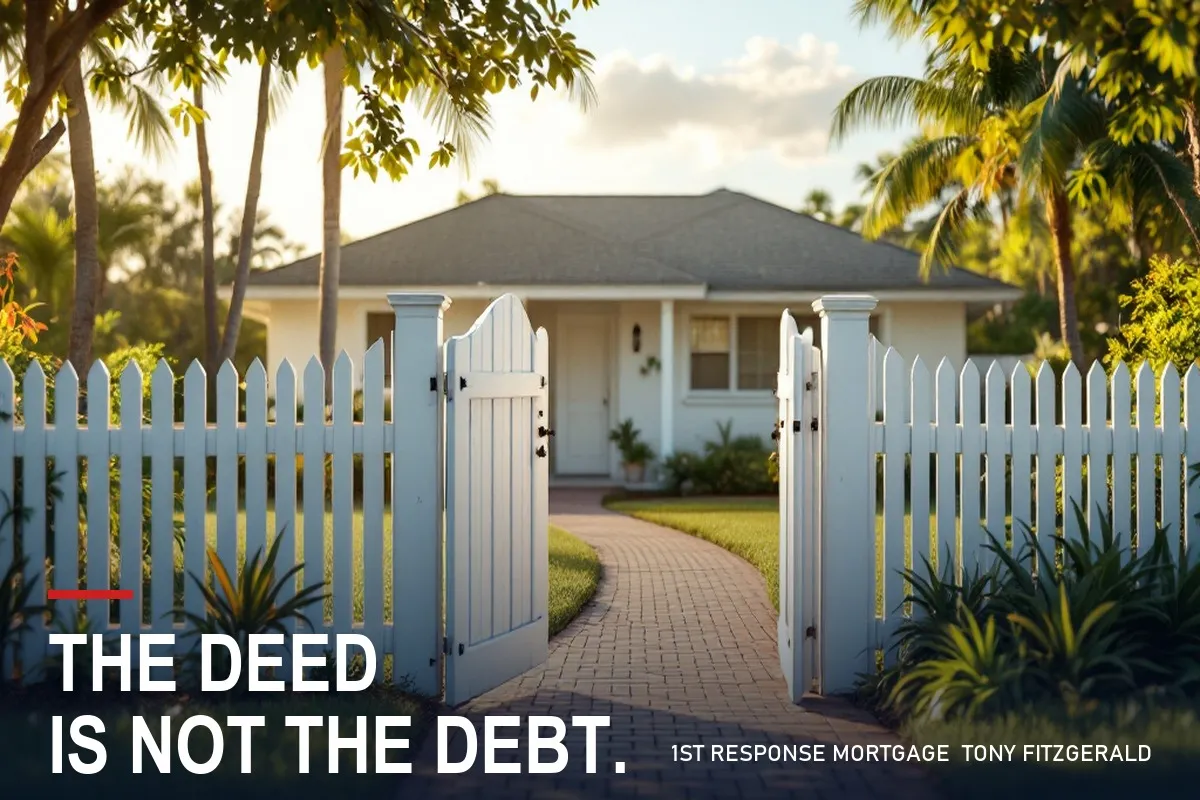
If you are going through a divorce and the house is on the list, here is the short answer. The deed and the loan are two different things. A quitclaim deed changes who owns the house. It does not change who owes on it. In most cases, a refinance is what actually gets a name off the loan.
This is a hard season, and the paperwork does not care how you feel. Baby steps. I am a loan officer, not an attorney or a tax pro. This is general education, not legal or tax advice.
Does a quitclaim deed take my name off the mortgage?
No. The Consumer Financial Protection Bureau says it directly (last reviewed April 14, 2023): coming off the title does not take you off the mortgage.
That can leave you with the worst of both. You signed away your ownership, and you still owe the debt. If a payment gets missed, the loan holder can still come to you, and your credit can take the hit. So talk to your attorney before you sign one.
Doesn't the divorce decree take care of the loan?
It takes care of it between the two of you. The CFPB says a decree or property settlement may assign a debt to one spouse, but a creditor can still collect from anyone listed as a borrower. The loan holder was not part of your divorce. Whether you can go back against your ex if they stop paying is a question for your attorney.
What actually releases a borrower from the loan?
A refinance. The spouse keeping the home qualifies alone, and a new loan pays off the old one. This is the usual route.
A written release. The loan holder agrees to let you go, sometimes through an assumption where the remaining spouse qualifies on their own. Not every loan or servicer makes this easy, so ask.
A sale. The house sells and the loan gets paid off.
The honest tradeoff on a refinance: you give up the old loan, and you get a new rate and new closing costs, whatever the market is that day. If your current loan is a good one, run that math before you agree to a refinance deadline in a settlement.
How does buying out a spouse work?
Usually, the equity owed to the departing spouse gets paid out of the new loan. The rules depend on the loan type:
Fannie Mae (Selling Guide B2-1.3-02, dated October 8, 2025) can treat a buyout as a limited cash-out refinance. The home must have been jointly owned for at least twelve months before the new loan funds, everyone must sign a written agreement on the transfer, and the person keeping the home must qualify and cannot take any of the proceeds.
FHA (Handbook 4000.1, revised August 2026) lets the equity owed count in the new mortgage calculation, documented by a divorce decree, settlement agreement or other legally enforceable equity agreement.
An existing FHA loan may also have a streamline path that removes a borrower without credit qualifying, when the decree awards the home and the payments to the remaining borrower and that person has made the payments for at least six months.
Either way, the underwriter needs the buyout amount in writing.
Can court-ordered support count as income?
Often, if it is going to keep coming. It is also your choice. Fannie Mae (B3-3.4-02, dated October 7, 2026) only considers it if you disclose it and ask for it to be counted. Then it wants six months of full, regular, timely receipt, and it must be expected to continue at least three years from the application date. FHA's handbook also looks for three years going forward, with three months of documented receipt on court-ordered support.
Watch the end date. Support that stops when a child ages out within three years may not count. If you are the one paying, Fannie Mae (B3-6-05, dated August 5, 2026) generally counts it as monthly debt when more than ten months of payments remain.
What should I do before I sign anything?
Take the draft settlement to your attorney, and ask a tax pro about the buyout.
Find out whether the spouse keeping the home can qualify alone before anyone agrees to a deadline.
Keep the current loan paid on time, no matter who is mad at who.
If you want a straight read on whether a buyout works, start with my mortgage questions page, or call or text (941) 941-5150. No judgment, and if keeping the house is the wrong move, I will tell you. Any new loan is subject to credit approval and full underwriting.
Guidelines change and every decree is different, so treat this as general education, not advice for your situation.
Tony Fitzgerald, NMLS #1284924.
Talk it through
Have a question about your own situation? I answer the phone. No pressure, no pitch, and if your current plan is the right one I will tell you that.
Straight answers to your mortgage questions
Already have a quote? Get a second look
Run the numbers on the calculator
More from Tony
1rmtg.com home · About Tony · How I run a mortgage call · All Field Notes posts
Loan programs: All loan options · First-time buyer · Self-employed · Refinance · HELOC and home equity · Non-warrantable condos
Where I lend: Sarasota · Lakewood Ranch · Bradenton · Venice · Every Florida location
Still have a question? 74 mortgage questions, answered straight
Tony Fitzgerald, NMLS #1284924. 1st Response Mortgage, powered by Mpire Financial Group LLC, NMLS #2108504, Florida Mortgage Lender License #MLD2467. Equal Housing Lender. NMLS Consumer Access: nmlsconsumeraccess.org. This article is general education, not financial, tax, or legal advice, and not an offer of credit or a commitment to lend. Terms vary by borrower, property, and transaction, and program guidelines change over time.
